
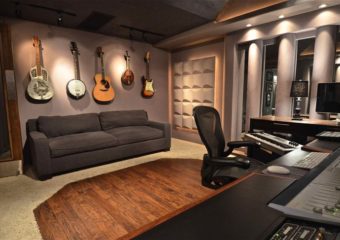
How to Set up a Home Music Studio
Setting up a home music studio is necessary to grow your music skills. A home music studio does not have to be elaborate as a professional studio. With basic music instruments, you can set up a decent studio without spending a lot of money.
When it comes to setting up a studio, start with the basics available at Musemini.com. As you grow your skills, you can go ahead and equip your studio with all the other equipment that you will need for the studio. here are some tips on setting a home music studio:
Choose a Specific Room
The first step is to choose a specific room for the studio. You will need a room that you do not use for other purposes or a room that you rarely use. The car garage can work as a good home studio.
However, you have to make the garage suitable by using the right ventilation. Choosing a specific room will give you time to plan the room effectively based on your needs. You do not need a big room for a home studio, and your spare bedroom is sufficient for a home studio.
Soundproofing
It is also necessary to do some home soundproofing. Soundproofing space will help you to protect the home from noise. Unlike popular belief, soundproofing does not have to be expensive.
There are some small things that you can do to soundproof your home studio, like using soundproofing mats. You can do soundproofing on your own without hiring anyone. Most of the soundproofing materials are available in your local store. Focus on the floor and walls at first.
Start with Basic Music Equipment
It is advisable to start with the basics that you will need for your home studio. it would be best if you had a good computer, microphone and audio mixer.
In case you are interested in playing musical instruments, it is advisable to have a musical instrument such as a guitar or piano. Producing good music is not always about the quality of the equipment. It is more about the skills that you have in producing music.
Create a Conducive Environment
It is very important to plan your home studio to make it a conducive environment. Start by moving the speakers away from the walls. It is also important to have comfortable chairs in your home studio so that you can remain comfortable when recording music or doing some practice.…

 PCM is an abbreviation for Pulse-Code Modulation. This is a digital version of the raw analog audio signals. In fact, this is the common audio format that is used in DVDs and CDs. If samples are taken at designated intervals that are linear in nature, then it is known as LPCM or Linear Pulse-Code Modulation.
 FLA is an abbreviation of Free Lossless Audio Codec. It is now one of the popular compressed formats available since it was introduced in 2001. The good thing about this format is that it compresses the original file by over 60%. In addition, no data is lost. Moreover, it is royalty-free and open source. Therefore, you are free to use without worrying about intellectual property constraints.